
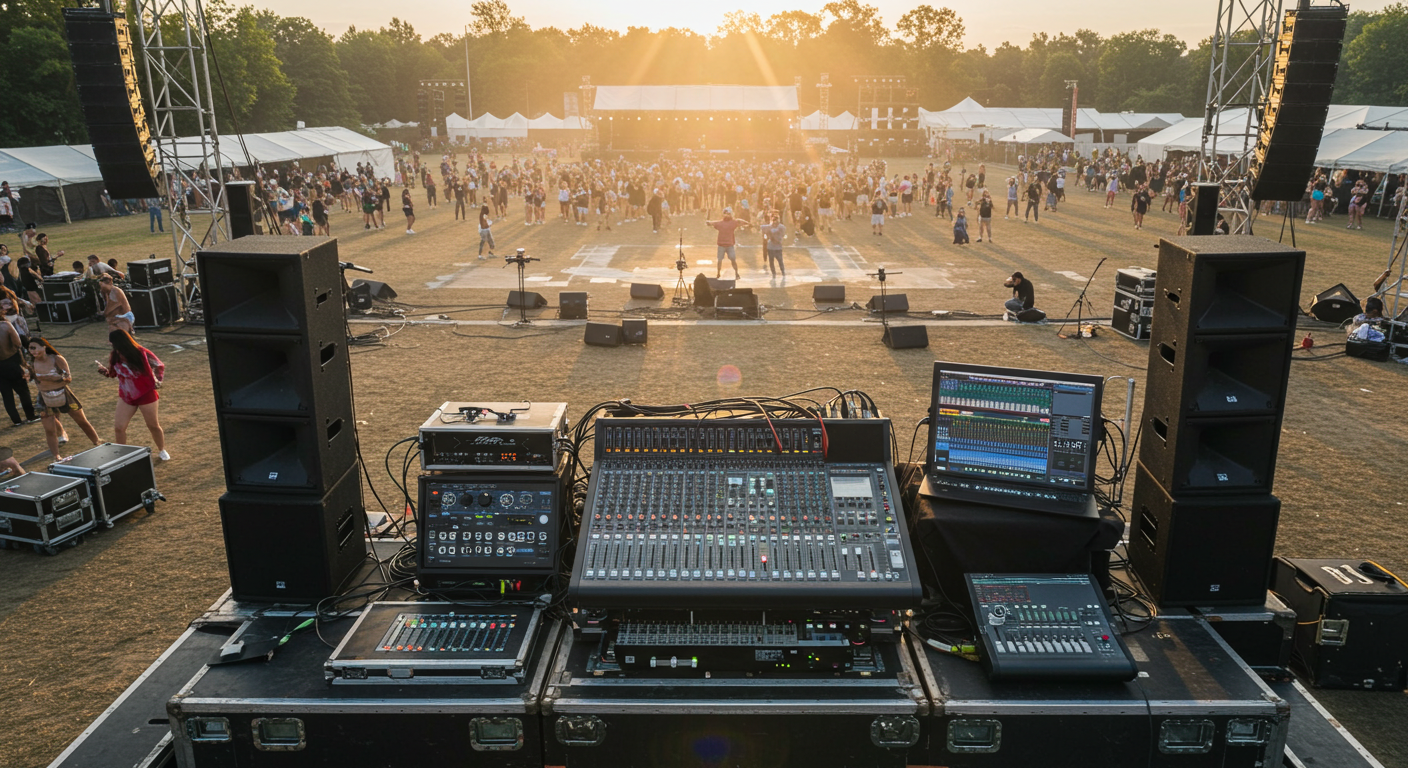
Ensuring high-quality sound is crucial for any successful event. A good audio company offers a variety of equipment and professional support to help you achieve a clear, balanced, and impactful auditory experience.
If you’re planning an event in Boston, here are the key considerations to keep in mind when choosing a full audio system:
Key Considerations When Choosing a Full Audio System
- Venue Size and Acoustics
The space’s dimensions, layout, and materials (such as high ceilings or glass surfaces) significantly affect how sound behaves. Larger or more reverberant venues may require a more powerful full audio system and acoustic treatments to maintain clarity.
- Audience Size
The number of attendees directly impacts sound quality. A bigger audience “soaks up” more sound, requiring a system with higher output to ensure everyone hears clearly.
- Event Type
Different events demand different setups. A speech or acoustic performance may only need a modest setup, while a DJ set or full band requires a stronger full audio system with subwoofers for deep, impactful bass.
- Equipment Needs
Work with a good audio company to determine the right gear for your event. Essential equipment may include:
- Microphones (wired, wireless, lapel, handheld) for presenters and performers.
- Speakers (PA systems or line arrays, depending on venue size).
- Mixers and amplifiers for sound control.
- Subwoofers to enhance low-frequency impact.
- Thorough Sound Checks
Before the event, test all microphones, speakers, mixers, and amplifiers. Simulate the event agenda during the check to catch and resolve potential issues in advance.
- Strategic Placement
Position speakers to provide even coverage and avoid obstructions. In larger venues, delay speakers may be necessary. Place microphones carefully, about 6–12 inches from the speaker’s mouth at a 45-degree angle, to minimize feedback and background noise.
- Venue Acoustics
For reverberant indoor venues, use acoustic treatments like panels or drapes. For outdoor events, windshields on microphones and strategic speaker placement help counter wind and sound dispersion.
- Continuous Sound Monitoring
Assign a sound technician to actively monitor and adjust audio levels throughout the event. This ensures a balanced mix and quick response to any feedback issues.
- Backup Equipment and Power
Have spare microphones, cables, and batteries on hand. Ensure a reliable power source, and consider backup power to avoid unexpected disruptions.
- Clear Communication
Maintain effective communication channels between the sound technician, presenters, performers, and event organizers to keep everything running smoothly.
Ready to Upgrade Your Audio?
A seamless audio experience is one of the most important elements of a successful event. By carefully evaluating your needs and working with a good audio company in Boston, you can secure the right full audio system for your space, audience, and event type. With proper planning, professional support, and high-quality equipment, your event will leave a lasting impression on every guest.