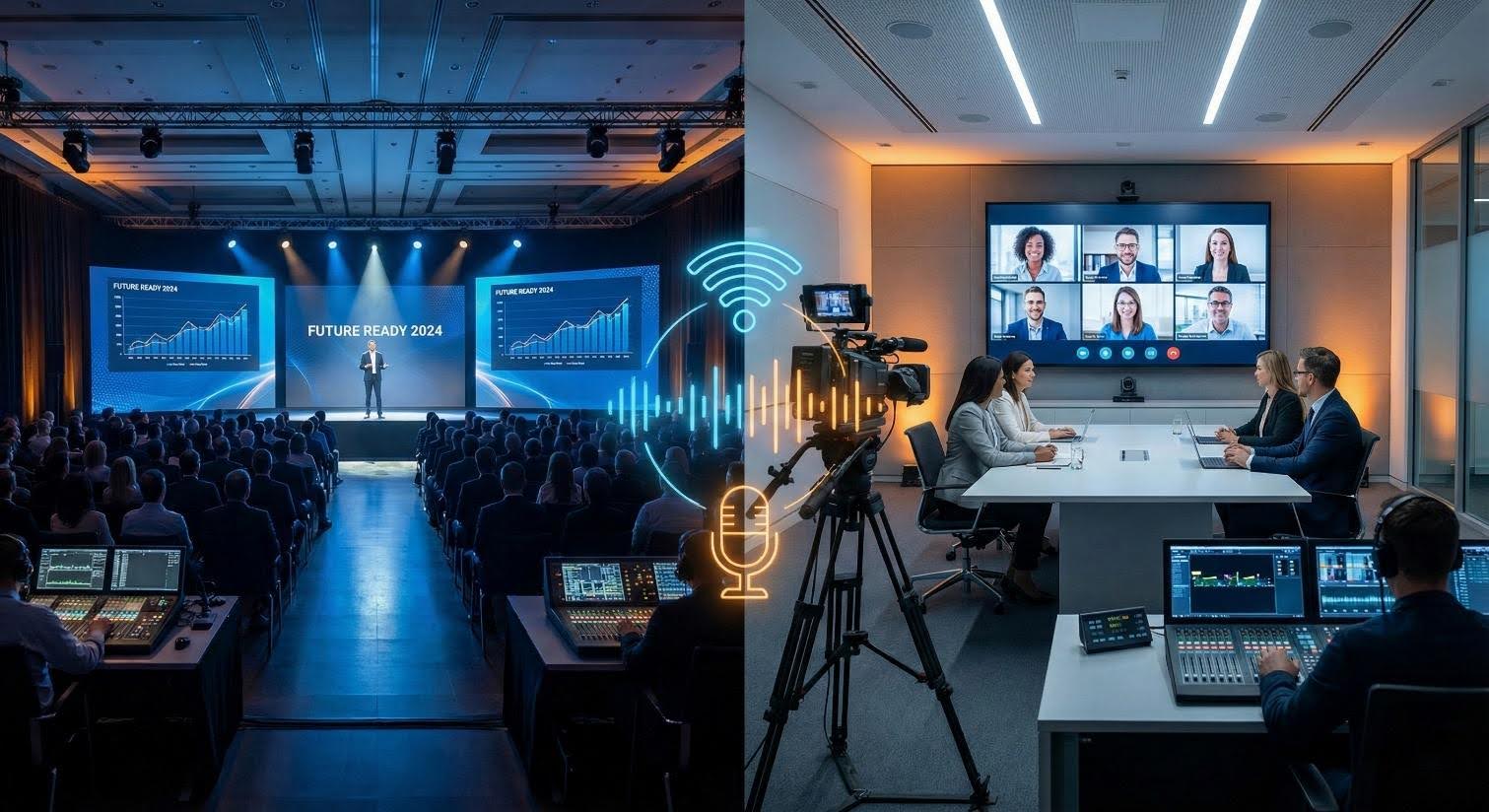
Your goal is to produce flawless multi-location AV events that work smoothly for every audience. This requires planning, coordination, and the right tech support. Whether you are managing multi-location AV events or a full multi-venue audio visual setup, the process demands expertise and strong communication.
You can explore professional full audio systems here: MLD Lighting & Sound.
Understanding Multi-Location AV Events
Producing flawless multi-location AV events requires meticulous planning and expert teams. You also need robust equipment like microphones and lighting. Reliable high-speed internet and thorough rehearsals are essential. Everything depends on seamless audio and visual integration, strong venue assessment, dependable backup plans, and coordinated communication across all vendors. This ensures consistent quality for both in-person and virtual attendees.
Pre-Event Planning and Strategy
Define Goals and Audience
Understand your event objectives and audience size. Review location layouts and virtual engagement needs.
Venue Assessment
Check room dimensions and identify obstructions. Review acoustics, electrical supply, and internet bandwidth for each location.
Vendor Coordination
Make sure all AV, IT, and streaming providers communicate early. This avoids conflicts and reduces last-minute stress.
Content Management
Centralize content collection and set clear deadlines. Use a unified system to keep all sites aligned and prepared.
Technical and Equipment Essentials
Crystal Clear Audio
Use high-quality wireless mics. Lapel and handheld options help support various presenters. Digital mixers and distributed speakers keep sound consistent. You also need coordinated frequency plans for multi-room setups.
Sharp Visuals
Use bright LED screens suited for the environment. Wide ballrooms need left and right main screens. Long rooms may need delay screens. Confidence monitors help presenters stay on track. Seamless video switching maintains a smooth flow.
Robust Lighting
Use strategic stage and room lighting to highlight speakers and reduce glare on screens.
Reliable Internet
Make sure you have enough bandwidth for streaming, live polls, and virtual interaction.
Backup Gear
Always keep extra cables like HDMI or XLR. Keep adapters and batteries ready. Equipment can fail at any time. Having backups ensures the show goes on without interruptions.
Rehearsals and Execution
Trusted AV Technicians
Have skilled technicians onsite for setup and real-time troubleshooting.
Thorough Testing
Conduct thorough rehearsals. Test video integration, audio levels, and streaming across all devices.
Speaker Ready Rooms
Provide controlled spaces for presenters to practice with the exact AV setup that will be used.
Content Integration
Blend live presentations with video playback and virtual Q&A in a seamless way.
Key Success Factors
Prioritize Audio
Weak sound disrupts remote attendees and reduces engagement.
Engage All Audiences
Plan interactive moments like polls and Q&A. This keeps both virtual and in-person attendees connected and engaged.
Streamline Management
Use automation or centralized system controls for sound, lighting, and video. These control consoles have been industry standards for decades because they are tested and trusted.
The Takeaway
Your event is made of countless elements. You have audio engineers, wireless microphones, main PA systems, and backstage monitors. Even with so many components, the most important goal is simple. Your client must have the time and clarity to present their message in the best light.
A clear and engaging presentation helps the audience understand and appreciate the message. It builds credibility and keeps listeners engaged. It also drives actions like learning or buying or making decisions. Great delivery creates a memorable and successful event. Poor execution can lose the audience. Your job is to make sure the message is delivered clearly every single time.
Learn more about professional systems that support the entire setup here:
Explore MLD Full Audio Systems